Amsterdam, 9 June 2026 – Tap Electric has raised €4 million in a funding round led by No Such Ventures. Existing investors Shamrock Ventures, Fair Capital Impact Fund and LUMO Labs also participated.
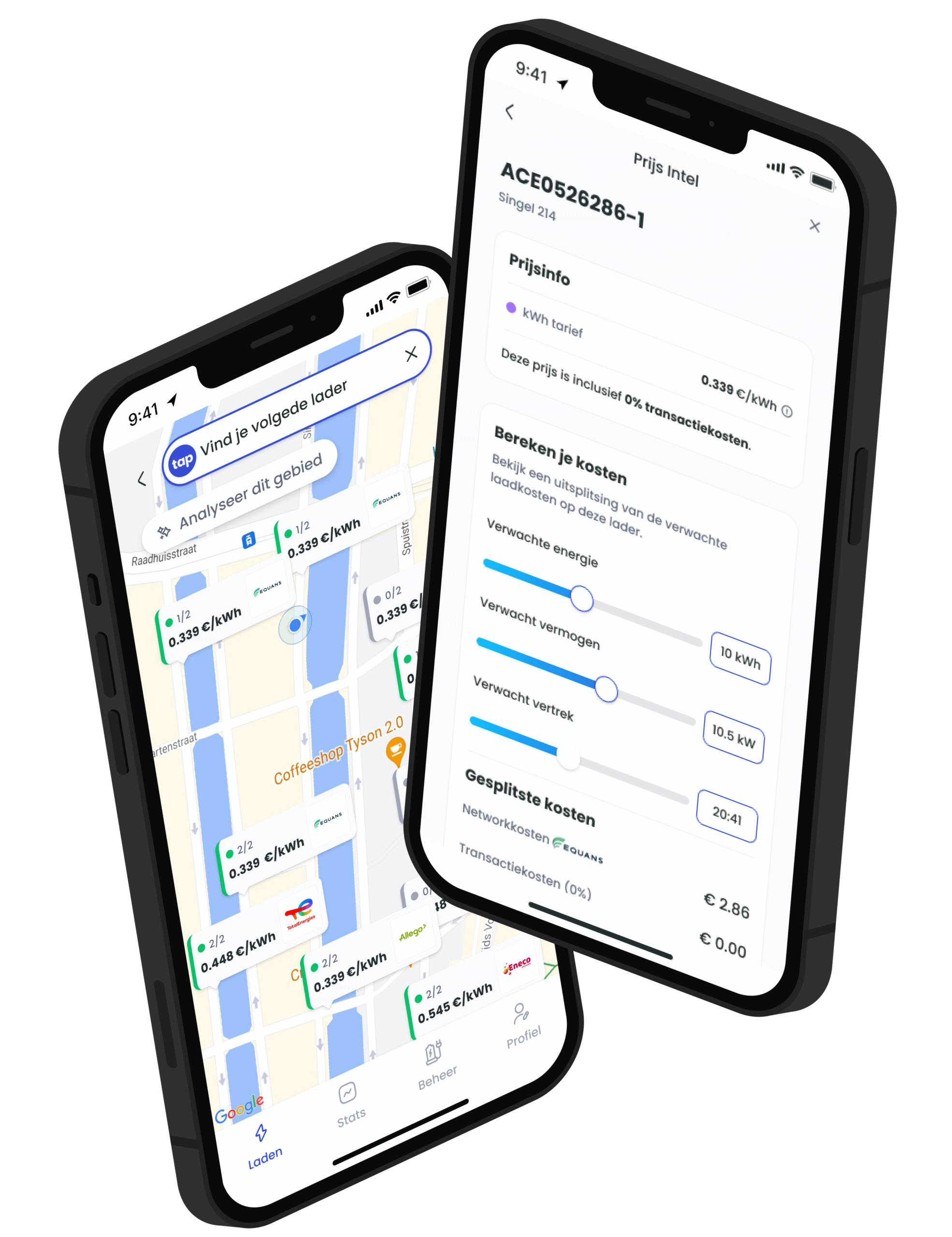
With the new capital, Tap will continue expanding its charging management platform across the Netherlands, Belgium, the United Kingdom and Ireland. The company will also invest in the further development of its charging app for EV drivers across Europe.

Public charging is moving further away from home charging
According to Tap, public charging is becoming increasingly expensive compared to charging at home. Analysis of hundreds of thousands of charging sessions in the Netherlands shows that charging at a public AC charger costs an average of €0.47 per kWh, while households pay an average of €0.26 per kWh for electricity (both including VAT). This means public charging is now 77% more expensive than home charging.
A year ago, that difference was still 68%.
For EV drivers without access to a private charger, this can add up to approximately €500 in extra costs per year.
“We believe electric driving can only achieve widespread adoption if charging remains affordable and easy to understand,” says Nico Spoelstra, Co-founder and CEO of Tap Electric. “That’s why we build technology that supports not only drivers, but also charge point operators, businesses and fleets. The better we match supply and demand, the lower the costs for everyone.”
Strong growth across Europe
Tap has achieved triple digit annual revenue growth over the past two years and has continued expanding its operations across Europe. Nearly 100,000 users now use the platform every month.
According to Tap, the Dutch situation is not unique. The company sees similar trends across other European markets.
“The challenge is the same everywhere,” says Spoelstra. “Charging costs remain too far removed from the underlying cost of electricity. By making smarter use of available capacity and price differences, we can make charging more affordable while also reducing pressure on the electricity grid.”
The analysis also shows that the price of DC fast charging in the Netherlands increased by 6% over the past year. The price of AC charging remained largely unchanged. As a result, the price gap between public AC charging and fast charging increased from 18% to 26%.
From charging app to energy platform
Investment aimed at making charging more affordable
No Such Ventures partner Thijn van Helvoirt believes this is exactly where the company’s strength lies.
“Tap looks beyond the individual charging session,” says Van Helvoirt. “The company helps users reduce their overall energy costs while making better use of existing infrastructure. The growth over the past two years shows that customers genuinely value this.”
Van Helvoirt will join the advisory board alongside Alef Arendsen, founder of NewMotion and partner at Shamrock Ventures.
While public charging costs remain high, Tap also sees a positive trend. The average petrol price increased by 25% over the past year to €2.39 per litre, while charging prices remained relatively stable. As a result, the cost advantage of electric driving has increased further.
With the new investment, Tap plans to work on vehicle-to-grid (V2G) projects, smart home charging solutions, open smart charging for public charging infrastructure, and new features that automatically help users make cheaper and more grid-friendly charging choices.
Methodology note: All prices include 21% BTW. Public charging prices are based on Tap Electric session data. Household electricity prices are calculated from CBS / ANWB national averages. Petrol prices come from CBS (Euro 95 national average pump price). Sessions were filtered to include only those with 2–100 kWh to exclude anomalies.
About Tap Electric
Tap Electric is an EV charging software company based in Amsterdam founded in 2021 by Nico Spoelstra and Dan Pezim. The company serves drivers, homeowners, businesses, installers, fleets and charge point operators through a charging app and charger management platform used across Europe, including The Netherlands, Belgium, the United Kingdom and Ireland.
Tap’s software connects drivers, chargers and energy systems to help make charging cheaper, simpler and more reliable. By combining charging infrastructure, energy prices and grid intelligence in a single platform, Tap helps users make better charging decisions while supporting the transition to electric mobility.
Contacts
Tap Electric
Nico Spoelstra, CEO
nico@tapelectric.app
No Such Ventures
Thijn van Helvoirt, Partner
thijn@nosuchventures.com